
From Barbed Wire to Breakthrough: Inside the Transformation at Sanders Estes Unit
There are places where people expect transformation—and places where they don’t.
A prison isn’t typically one of them.
But inside the Sanders Estes Unit in Venus, Texas, something remarkable is happening.
Men who once felt defined by their past decisions are now redefining their futures through the Prison Entrepreneurship Program (PEP)—a groundbreaking initiative that blends business education with deep personal development. And as this video captures, the results are nothing short of powerful.
A Different Kind of Classroom
Step inside the program, and you won’t find a traditional prison environment.
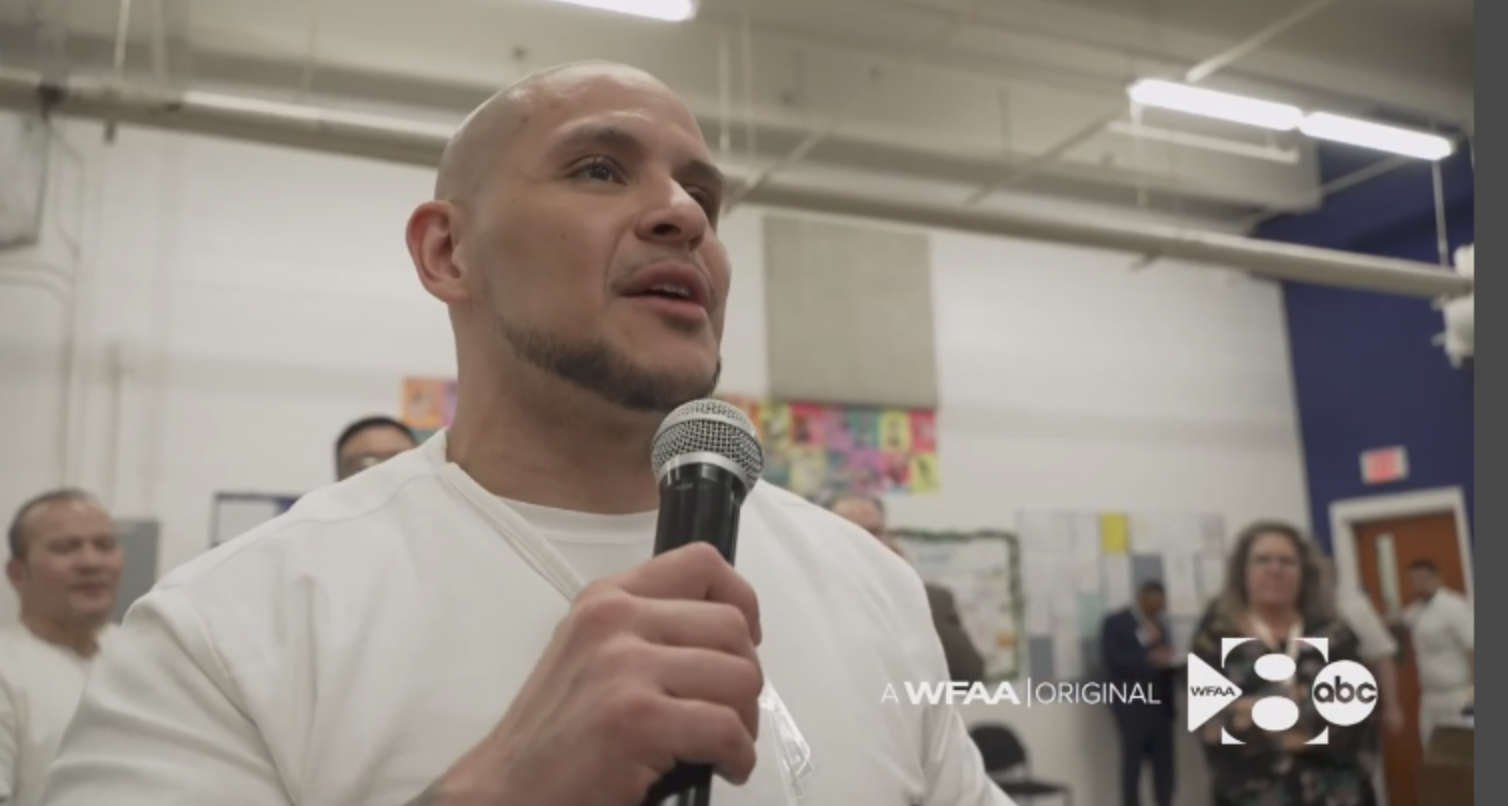
Instead, you’ll see men standing, speaking, laughing, presenting ideas, and—perhaps most importantly—being seen.
Participants in PEP take part in an intensive, multi-month curriculum that teaches business fundamentals, financial literacy, communication, and leadership skills.
But what often surprises them is this: [wfaa.com]
It’s not just about business.
“You think it’s all about business… but it’s really about character development,” one participant shared. [wfaa.com]
That shift—from external success to internal transformation—is at the heart of the program.
Breaking Down Walls from the Inside Out
For many of the men, the first challenge isn’t writing a business plan—it’s confronting themselves.
Through structured exercises, mentorship, and even something as simple as choosing a nickname, participants are encouraged to break down emotional barriers and embrace vulnerability. [wfaa.com]
It’s a process that replaces survival instincts with self-awareness.
Stories shared inside these walls speak to lives shaped by trauma, hardship, and difficult choices. But instead of defining the future, those experiences become the starting point for change.
As one inmate put it:
“I see the changes in myself.” [wfaa.com]
That realization is often the first real turning point.
Learning to Build—Businesses and Lives
Each day in the program is structured for growth.
Participants develop:
- Business plans
- Public speaking skills
- Financial strategy
- Professional confidence
- Accountability and leadership habits
They also build relationships with executives, entrepreneurs, and mentors from the outside world—connections that become critical when they reenter society. [wfaa.com]
At the end of the program, the journey culminates in a “Shark Tank”-style business pitch competition, where inmates present their ideas to real business leaders. [wfaa.com]
It’s more than a presentation.
It’s proof of transformation.
The Power of Second Chances
Programs like PEP exist because the challenges facing formerly incarcerated individuals are enormous.
Many leave prison with limited job prospects, unstable housing, and few opportunities. Without support, these barriers can lead to a cycle of reoffending.
But entrepreneurship offers a different path.
It provides:
- A way to create opportunity instead of waiting for it
- Skills that translate across industries
- A sense of ownership and purpose
- A vision for a better future [pep.org]
And the impact is measurable.
- PEP graduates have recidivism rates below 9%, far lower than typical state averages. [pep.org]
- 100% of graduates are employed within 90 days of release, often much sooner. [pep.org]
- Hundreds of businesses have been launched by former participants. [pep.org]
These aren’t just statistics—they’re lives redirected.
More Than a Program—A Movement
What makes the Sanders Estes Unit experience so meaningful is that it extends beyond prison walls.
PEP is built on a mission to transform lives, restore families, and rebuild communities. [pep.org]
The transformation doesn’t stop at graduation. It accelerates—through continued mentorship, job placement, and entrepreneurial support after release.
In other words, this isn’t just rehabilitation.
It’s redefinition.
What This Video Captures
As you watch the footage from this event, you’ll notice something that may challenge expectations:
Hope.
You’ll see men:
- Owning their past while stepping into their future
- Speaking with confidence and clarity
- Supporting one another as a community
- Rebuilding identity with intention
This is what change looks like—not as a distant idea, but as a lived experience.
A New Narrative
The story unfolding at Sanders Estes Unit is not about where these men have been.
It’s about where they’re going.
It’s about recognizing that transformation is possible when people are given the tools, the accountability, and the belief that they can be more than their past.
And perhaps most importantly, it’s about understanding that second chances don’t just change individuals—they strengthen entire communities.